
Play chess with an AI friend who talks with you
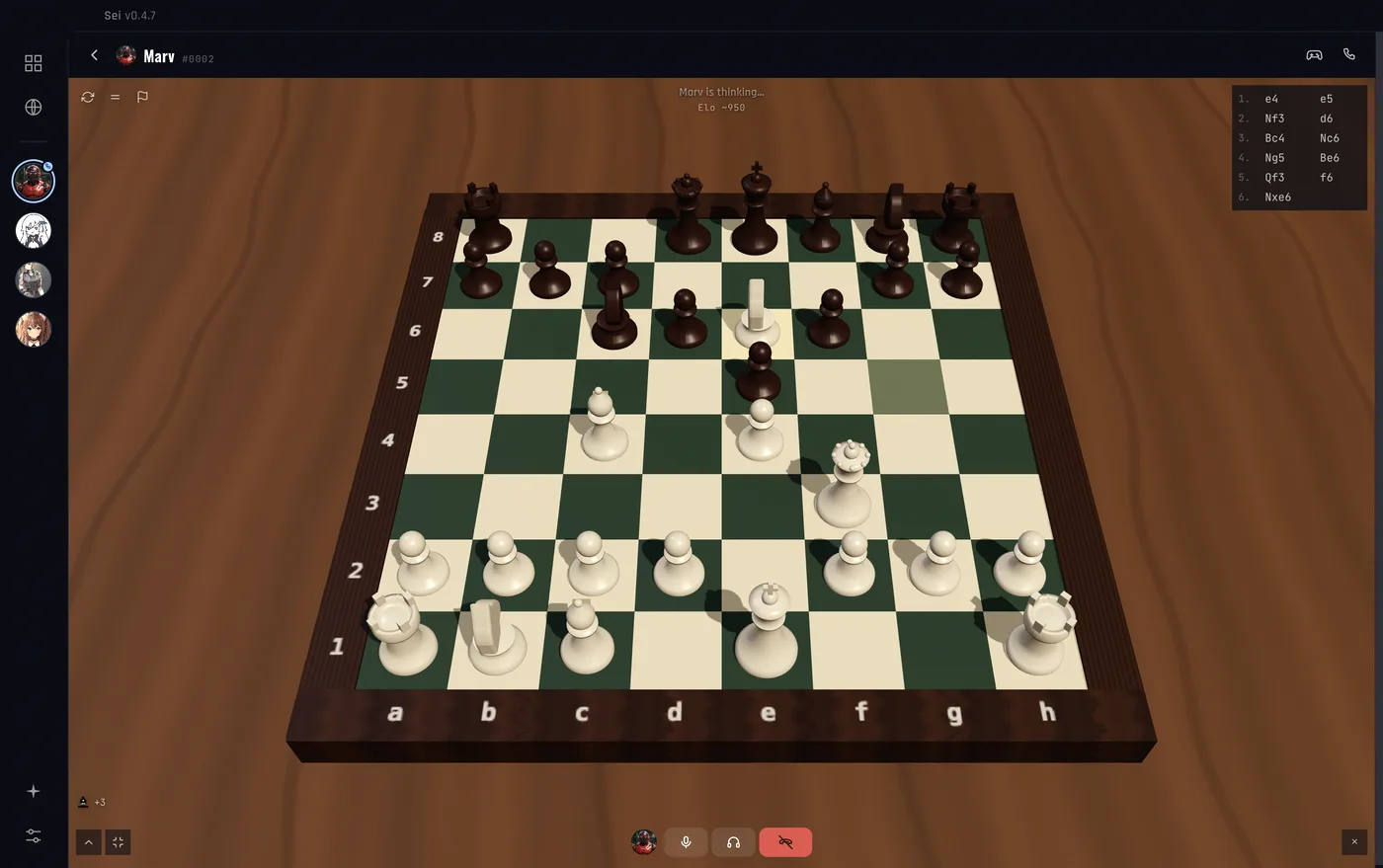
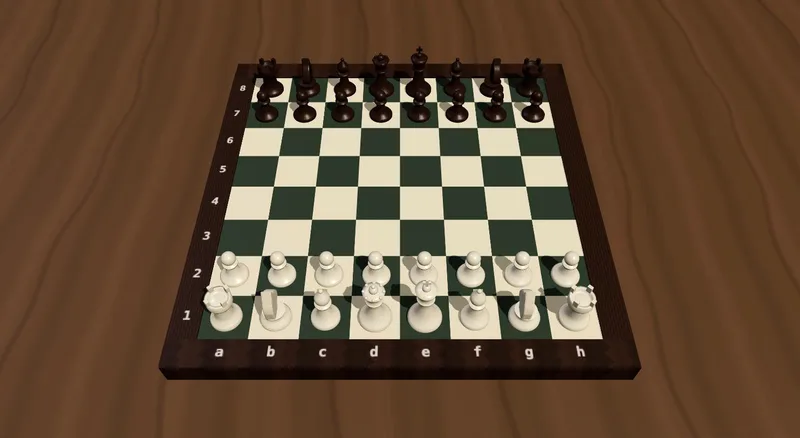
Sei is an AI gaming companion: a free desktop app for Mac and Windows. Your companion sits across a 3D chess board from you. They play like a real person at their own level, talk with you while you play, and remember the game next time.
How it works
- Open a chat with your companion. Press the Play together button at the top and pick Chess.
- Pick a side. Choose White, Black, or Random, then press Launch. Your first game downloads a small move model (about 21 MB) once.
- Play and talk. Move your pieces on the board. Type in the chat or start a voice call. Your companion plays their moves and talks with you when they have something to say.
An AI chess companion, not a chess engine
Most chess bots are engines with a strength slider. Sei's chess is built the other way around: it starts from a character, and the chess follows from who they are.
- Moves like a person. Moves come from Maia-3, a model trained on human games to predict what a player at a given rating would play. Sei adds the slips people make at that level, like missed tactics and the odd blunder.
- Plays in character. Your companion chooses from a few human moves the one that fits their personality. A careful character plays carefully. A show-off goes for the flashy option.
- Strength from their personality. On your first game, Sei sets a strength between 400 and 2000 Elo and a play style from your companion's persona. You can change both in Edit companion, under Games.
- Meets you where you are. If you lose, the next game is a little easier. If you win, it gets a little harder. This only applies while the strength is on Auto.
- Talks, but not too much. They answer you, react to a good move, offer a draw, or concede a lost game. They do not narrate every move.
- Remembers you. Finished games are saved in your chat with a move-by-move replay. Your companion can save what mattered to long-term memory and bring it up later.
How strong should they be?
On Auto, Sei reads your companion's personality and picks a strength that fits it. Most characters land between 600 and 1400. As a rough guide:
| 400 to 700 | Barely knows the rules. |
|---|---|
| 800 to 1100 | A casual player. |
| 1200 to 1500 | A club player. |
| 1600 to 2000 | A strong player. 2000 is as fierce as it gets. |
To set it yourself, open Edit companion, go to Games, and switch Chess to Custom. You get a slider from 400 to 2000 in steps of 50, and a box where you can describe their play style in your own words, like "loves early queen attacks" or "trades everything off and grinds endgames." On Auto, the strength moves with your results but stays close to the character: it never drops more than 600 below or rises more than 200 above where it started. Draws, and games resigned before the third move, do not change it.
Where the moves come from
The moves are worked out on your computer. Sei's open source engine, cce-1, runs the Maia-3 model locally and lets it suggest a few moves a person at that rating would play, with the slips a person at that level makes. A small copy of Stockfish runs alongside it only to spot tactics and judge who is ahead; it never picks the move. Your companion then chooses among those few candidates, so their personality decides the style of the game, not how strong it is. If the AI call for that choice fails, the engine plays its top candidate itself, at the same strength.
On the board
- Click a piece and then a square, or drag it. Dots and rings show the legal moves.
- Right-click and drag to draw arrows and circles while you plan.
- The last move and any check are highlighted. Pick your piece when a pawn promotes.
- Flip the board, see captured pieces, and scroll back through the move list.
- Full rules: castling, en passant, promotion, and draws by stalemate, threefold repetition, insufficient material, the 50-move rule, or agreement.
- Leave in the middle of a game and it is waiting for you when you come back. Each companion has one game going at a time.
What your companion says
They talk about the game the way a friend across the table would: a groan at a lost knight, a jab when you take too long, a worry about their king. They never read out squares or notation, and they do not announce their moves. If you go quiet for a while on your move, they may nudge you once. Several quick messages from you get one reply, and when the game ends they react to how it went.
Who it is for
Sei is for a casual game with a friend who has opinions about it. It does not analyze your games, give lessons, offer hints or takebacks, export PGN, or track a rating. There are no time controls and no games against other people. If you want to train seriously, a dedicated training site or an AI chess coach will suit you better. If you want someone to play with, who plays like a person and talks with you, that is what this is for.
The same companion in every game
Chess is one way to play with your Sei companion. The same character, with the same memory of you, also joins your Minecraft world as a real player, farms beside you in Stardew Valley, takes turns drawing in Draw!, and with Backseat watches you play anything else. See all of Sei.
Requirements
| Computer | macOS (Apple Silicon or Intel) or Windows |
|---|---|
| Download | A one-time move model of about 21 MB, fetched on your first game |
| Strength | 400 to 2000 Elo. Auto from the persona, or set by you. |
| Clock | None. Games are untimed. |
| Voice | Optional. Type in the chat or talk on a voice call. |
Questions
How strong is my companion at chess?
Does it play like a person or like a chess engine?
Can I talk to my companion during the game?
Will my companion remember our games?
Is the game timed? Can I choose my color?
Can I take back a move or ask for a hint?
Can I play while my companion is in Minecraft?
Is chess with Sei free?
Play a game
Download Sei, pick a companion, and choose Chess from Play together in your chat.